Introduction
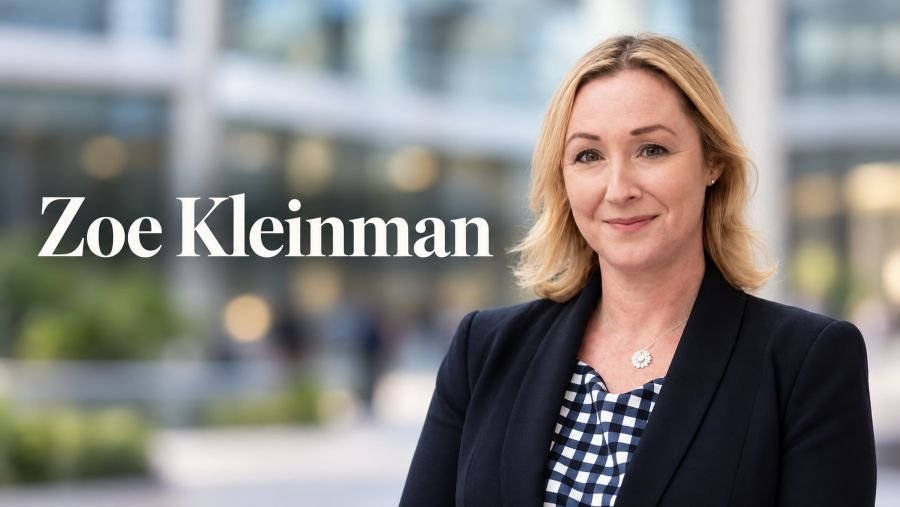
Zoe Kleinman is a British journalist, broadcaster, and the BBC’s Technology and AI Editor. She is known for reporting on artificial intelligence, cybersecurity, social media, and major technology companies.
Her career started behind the scenes. She worked in communications, wrote articles, and learned how television news worked. Today, she interviews some of the biggest names in technology.
Her story is quite interesting. She did not study computer science. Instead, she followed her interest in writing and gradually found her place in technology journalism.
Quick Facts
| Details | Information |
|---|---|
| Full Name | Zoe Kleinman |
| Nationality | British |
| Profession | Journalist, broadcaster, presenter |
| Known For | BBC technology reporting |
| Current Position | Technology and AI Editor |
| Employer | BBC News |
| University | University of Southampton |
| Qualification | BA English |
| Graduation Year | 1998 |
| BBC Career | Began in 2001 |
| Technology Reporting | Since 2008 |
| Major Appointment | BBC Technology Editor, 2021 |
| Marital Status | Married |
| Children | Three |
| Husband’s Name | Not publicly verified |
| Date of Birth | Not publicly confirmed |
| Salary | Not publicly verified |
| Net Worth | Not publicly verified |
Who Is Zoe Kleinman?
Zoe Kleinman is a British technology journalist who works for BBC News.
She became the BBC’s first Technology Editor in September 2021. Before that, she spent years reporting on technology, business, online safety, and developments in the tech industry.
Her reporting goes beyond product launches.
She asks questions about how new technology changes people’s lives. That includes artificial intelligence, online privacy, children’s safety, and the growing influence of major technology companies.
She appears across BBC television, radio, and online news. Her reports reach audiences in Britain and internationally.
One thing stands out. She tries to make difficult subjects understandable to people who may know very little about technology.
Childhood and Early Interest in Technology
Her interest started young.
In a personal career account shared in 2026, Kleinman explained that she had always enjoyed gadgets. Her father liked technology too.
The family owned a BBC Micro computer. She experimented with it and enjoyed playing computer games, including Pac-Man.
At the time, she was simply having fun. She was already learning basic ideas about computers without thinking about a future career.
Journalism interested her too.
At around 13, she and a school friend named Jessica decided they wanted to become journalists.
A careers teacher discouraged the idea, telling them that journalism was a popular career choice.
Still, the ambition stayed.
Kleinman also remembered watching television with her mother and becoming interested in the people who prepared broadcasting scripts and programmes.
She began to understand that television needed writers, producers, and researchers working behind the scenes.
That discovery mattered. It gave her another way to think about a career in broadcasting.
Her exact birthplace, childhood address, and school names have not been established through reliable public records.
Education and University Years
Kleinman studied English at the University of Southampton.
She graduated in 1998 with a Bachelor of Arts degree in English, as confirmed by the university.
Her university experience included practical journalism work.
She served as features editor of the student newspaper, Wessex Scene, where she gained experience writing and editing articles.
She also worked in the university press office during summer holidays.
The work was fairly basic at first. She handled office duties and helped prepare press releases.
But she liked seeing stories reach newspapers.
After university, she gained experience with a local newspaper and university public relations work.
These jobs helped her understand the media industry. She learned how to write for different audiences and explain information clearly.
She had not yet joined the BBC. That came later.
How She Started Working at the BBC
Her BBC career began in 2001.
In her own account, Kleinman recalled seeing an advertisement in The Guardian for a BBC internal communications position.
The contract lasted 12 months.
She applied and got the job.
She later described feeling nervous on her first day outside BBC Broadcasting House in London.
It was a major opportunity, although she was not yet working as an on-air journalist.
Her early responsibilities involved staff communications and writing for the BBC’s internal newspaper, Ariel.
She also developed an interest in the broadcaster’s research and development projects.
This introduced her to emerging technologies, television equipment, and new ways of producing digital content.
Her interest kept growing.
Eventually, she worked on the website for BBC Two’s business programme Working Lunch.
Then came an unexpected opportunity.
The programme team asked her to produce a technology news report for television.
She was nervous about appearing on screen. Her editor encouraged her to try.
The first experience led to more reporting work.
By 2008, she had moved into technology journalism, the field that would become her professional speciality.
Building Her Career as a Technology Reporter
Technology reporting gave Kleinman plenty to work with.
New devices were appearing. Social media companies were growing. Online privacy was becoming a bigger public concern.
She reported on these subjects while working across BBC programmes.
Her assignments also included practical demonstrations of new technology.
She has tested virtual reality, spent time in a house filled with robots, experienced driverless cars, and raced drones in the Nevada desert.
She even attempted to manage everyday activities using Bitcoin during a reporting assignment on the Isle of Man.
These reports showed audiences what technology could actually do.
But her work was not limited to gadgets.
She also covered questions about children’s online spending, social media companies, cryptocurrency, and digital privacy.
Her investigations included coverage of the Facebook–Cambridge Analytica controversy.
She reported on parents whose children had spent large sums of money through mobile and video games.
The subject attracted political attention in Britain and became part of wider discussions about gaming and consumer protection.
Becoming the BBC’s First Technology Editor
September 2021 brought a major career development.
Kleinman was appointed the BBC’s first Technology Editor.
The appointment followed years of reporting experience.
It meant taking greater responsibility for explaining major technology news to BBC audiences.
Artificial intelligence soon became one of the biggest subjects in her work.
She also continued reporting on cybersecurity, digital regulation, social media companies, and the technology industry.
Her working days could be demanding.
In a public reflection on her editorial role, she described days beginning with BBC Radio 4’s Today programme and ending with the BBC’s evening television news.
She also explained that technology journalists must keep learning.
New stories can emerge quickly. Reporters need to understand the facts, speak to experts, and explain developments within tight deadlines.
For Kleinman, that learning process has remained part of the job.
Her Work During the COVID-19 Pandemic
In March 2020, her reporting took an unexpected turn.
The COVID-19 pandemic was spreading, and the BBC needed additional journalists covering health news.
Kleinman was asked to move temporarily from technology reporting to the health team.
She accepted.
Her work changed almost overnight.
Instead of covering new devices and technology companies, she was reporting on a worldwide public health emergency.
The University of Southampton published an interview with her in May 2020.
She described the difficulty of adjusting to the new subject and the emotional weight of reporting during the pandemic.
She also worked remotely.
Her home became a temporary broadcasting space, with basic recording equipment helping her continue radio and television reporting.
It was a challenging period.
The experience showed how journalists sometimes need to work outside their usual subjects when major news events demand it.
Reporting on Artificial Intelligence
Artificial intelligence is now a main part of Kleinman’s work.
She reports on how AI systems are built, what companies plan to do with them, and the concerns surrounding their use.
Her stories include AI-generated content, employment, privacy, online safety, and government regulation.
In November 2023, she led BBC coverage of the UK government’s AI Safety Summit at Bletchley Park.
The event brought together political leaders, technology companies, and researchers to discuss risks associated with powerful AI systems.
She also reported on the Paris AI Action Summit in 2025.
These assignments placed her close to international discussions about how AI should be developed and controlled.
In September 2026, she continued reporting on concerns about the speed of AI development.
Her articles have examined questions raised by researchers and technology executives about the risks of increasingly capable AI systems.
Interviews With Leading Technology Figures
Kleinman has interviewed several well-known technology leaders during her BBC career.
These include:
- Tim Cook: Apple CEO.
- Satya Nadella: Microsoft CEO.
- Demis Hassabis: Google DeepMind co-founder and CEO.
- Jensen Huang: Nvidia CEO.
- Brad Smith: Microsoft President.
- Dave Baszucki: Roblox founder and CEO.
Her interviews often focus on the wider effects of technology.
She asks about business decisions, artificial intelligence, safety concerns, and how companies respond to criticism.
Interviewing senior executives is only part of her job. She also speaks with researchers, technology users, parents, and people affected by the stories she reports.
BBC Television and Radio Appearances
Kleinman has worked across several BBC television, radio, and digital services.
Her career includes reporting or presenting work associated with BBC News, BBC World News, BBC Radio 4, the BBC World Service, Working Lunch, and BBC technology programming.
She has also presented BBC Radio 4’s PM programme.
Her work appears in different formats.
Sometimes she explains a breaking news story during a live broadcast. At other times, she produces a longer report that examines a new technology or investigates a problem.
Her ability to work across these formats has been an important part of her broadcasting career.
Public Speaking and Industry Events
Her work extends outside the BBC newsroom.
Kleinman is also a conference speaker and event moderator.
She participates in discussions about artificial intelligence, online safety, digital policy, and the relationship between technology companies and society.
In March 2025, she took part in an All-Party Parliamentary Group on Artificial Intelligence event held at the House of Lords.
The discussion covered AI governance, cybersecurity, and data privacy.
She has also moderated discussions involving technology professionals and media organisations.
These appearances give her opportunities to discuss subjects she regularly covers as a journalist.
Is Zoe Kleinman Married?
Yes. Kleinman has publicly described herself as a married woman.
In a message shared around International Women’s Day in 2025, she referred to herself as a military wife.
She spoke about managing work alongside family responsibilities.
Her husband’s name has not been reliably confirmed through the public sources reviewed.
There is also no dependable public information establishing the date or location of their marriage.
Does She Have Children?
Yes. Kleinman is a mother of three children.
She confirmed this herself while discussing the responsibilities of working parents.
Her account mentioned everyday family activities, including helping with school projects, arranging appointments, and taking children to the park.
She has spoken positively about both her professional and family roles.
The names and dates of birth of her children have not been independently verified.
What Is Her Age?
Kleinman’s exact date of birth has not been confirmed through reliable public sources.
She has discussed her age in relation to becoming a mother and receiving her BBC editorial appointment, but an authoritative public birth record has not been established.
For that reason, it is better not to publish an exact birthday or present an estimated age as confirmed.
Who Are Her Parents?
Kleinman has mentioned both parents in public career reflections.
Her father shared her interest in computers and gadgets.
She also recalled conversations with her mother about the people who worked behind television programmes.
These childhood experiences contributed to her interests.
However, her parents’ full names and professions have not been reliably verified.
Salary and Net Worth
Kleinman holds a senior editorial position at BBC News.
She is also known for public speaking and moderating technology events.
However, her exact salary has not been independently verified.
There is no dependable public record establishing her personal net worth either.
Online figures without supporting financial documents should not be treated as confirmed information.
Career Achievements and Recognition
Several documented moments stand out in her career.
She became the BBC’s first Technology Editor in 2021 after years of technology reporting.
She led coverage of major AI summits and interviewed executives at leading international technology companies.
Her work has also included investigations into online spending, data privacy, and the effects of major technology platforms.
In 2026, she appeared on Computer Weekly’s Most Influential Women in UK Tech longlist.
She has received further recognition in UK technology industry rankings.
For a journalist who began in internal communications, the career change has been substantial.
Where Is She Working Now?
As of October 2026, Kleinman is working as the BBC’s Technology and AI Editor.
Her reporting continues to cover artificial intelligence, cybersecurity, new devices, technology companies, and the effect of digital services on people’s lives.
She also interviews technology executives and participates in discussions about technology policy.
Her professional focus remains clear: explaining complicated technology stories to general audiences.
Final Thought
Zoe Kleinman’s career did not follow a straight line.
She studied English, worked in university communications, joined the BBC behind the scenes, and gradually moved into television journalism.
Her childhood interest in computers stayed with her.
Years later, that interest became a major part of her professional life.
Today, she reports on stories that affect millions of people, from online privacy to the future of artificial intelligence.
Her story shows that a journalism career can begin in unexpected places. Experience grows through writing, asking questions, trying unfamiliar work, and staying curious.
Frequently Asked Questions
1. Who is Zoe Kleinman?
Zoe Kleinman is a British journalist and the BBC’s Technology and AI Editor.
2. What is Zoe Kleinman famous for?
She is known for BBC technology reporting, AI coverage, cybersecurity stories, and interviews with technology leaders.
3. Where did Zoe Kleinman study?
She attended the University of Southampton and graduated with a BA in English in 1998.
4. When did she join the BBC?
She has said that she joined the BBC in 2001 through an internal communications position.
5. Is Zoe Kleinman married?
Yes. She has publicly described herself as a military wife.
6. Does Zoe Kleinman have children?
Yes. She has three children.
7. How old is Zoe Kleinman?
Her exact age and date of birth have not been reliably confirmed.
8. What is Zoe Kleinman’s net worth?
Her personal net worth is not publicly verified.